Abstract
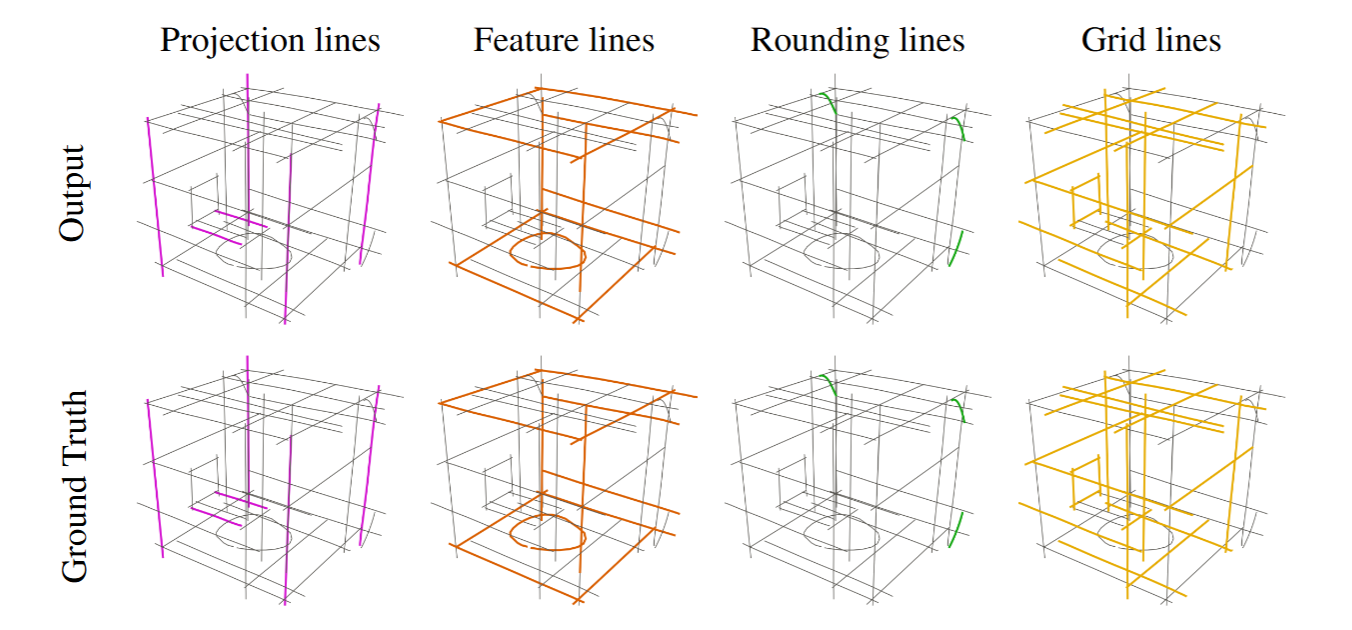
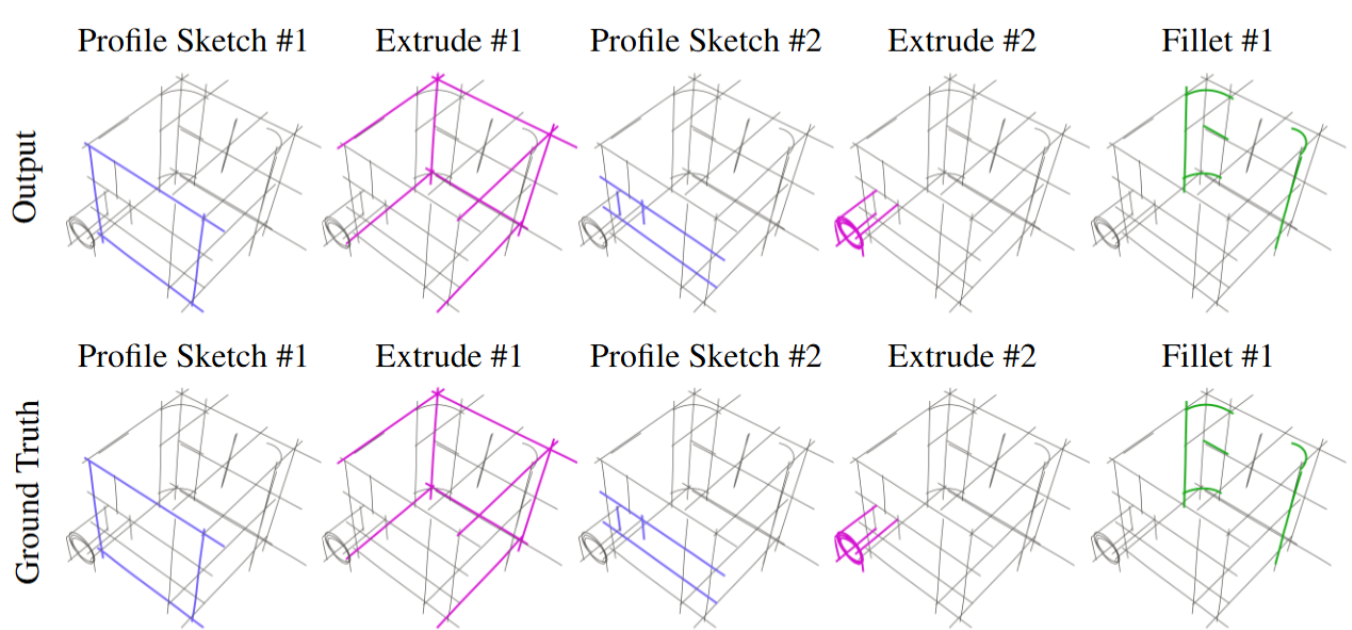
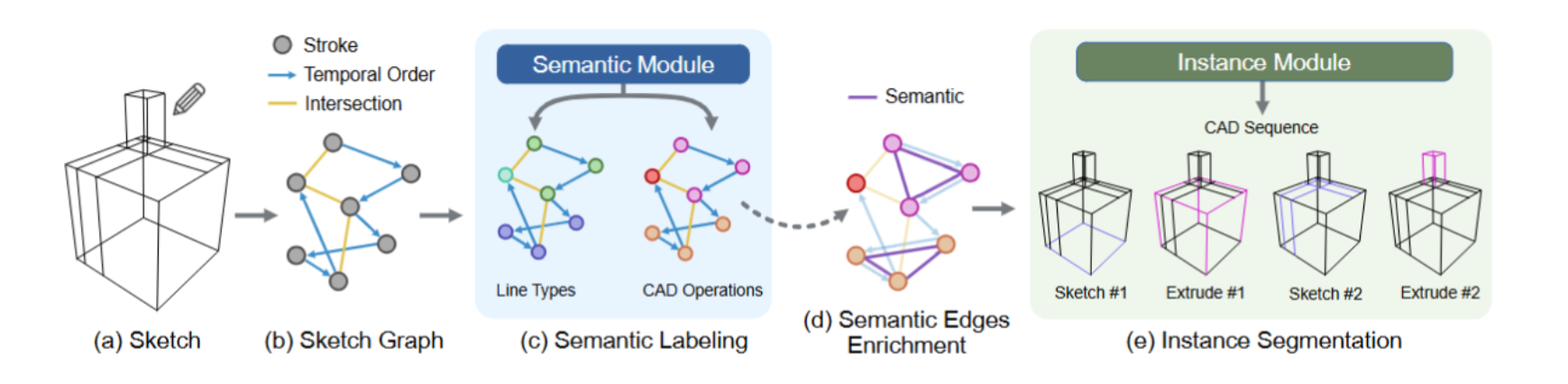
Concept sketches represent an effective way to convey information about the shape and construction of a 3D object. While these perspective sketches encode information regarding the shape components and the construction process, recovering and interpreting such information remains a challenging task. In this paper, we propose a pipeline to extract semantic information from design sketches. We model sketches as a graph, where nodes correspond to pen strokes and the edges represent the tem- poral order and stroke intersections. We analyze graphs through a Graph Neural Network-based pipeline, where the Semantic Module performs a classification task to label each stroke and the Instance Module groups stroke into CAD operation instances through a link-prediction task. We trained and evaluated our pipeline on a dataset made up of clean sketches extracted from CAD sequences and noisy synthetic ones. We also tested our pipeline on real hand-draws sketches, acquired through a custom drawing interface. Our results demonstrate the effectiveness of the proposed method for semantic labeling and instance seg- mentation, providing a promising foundation for more complex tasks such as sketch understanding and automatic translation to CAD sequences.
Results